
A Black Archives × Most Incredible Studio Composition
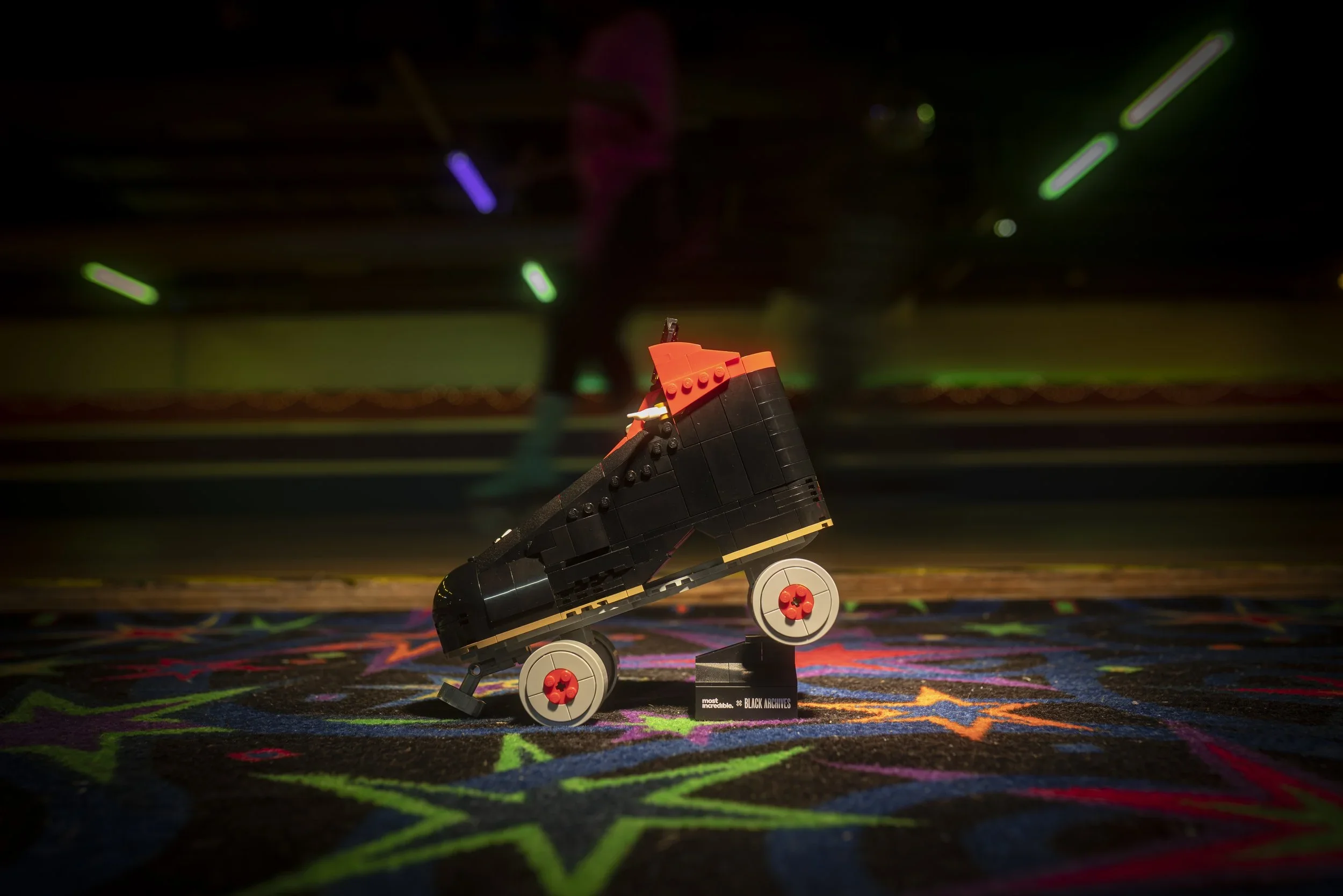
IDENTITY
|
Composition Number |
MIS-2024-002 |
|
Drop Date |
October 24, 2024 (pre-order through November 24, 2024) |
|
Collaborator |
Black Archives × Most Incredible Studio |
|
Status |
SOLD OUT |
|
Credits |
Syreeta Gates (Founder of Most Incredible Studio) Renata Cherlise (Founder of Black Archives) Randall Wilson (LEGO Artist) Josh Taylor (Photographer) Russell C Hamilton (Photographer) Jack X Li (Videographer) Don Is Dope (Packaging) JP Reynolds (Website Designer) Melissa Stinson (Consultant) The Rink Chicago Rollers Supreme Skate Club |
THE ORIGIN STORY
Long before roller skating became a social media trend, it was a sanctuary. For decades, Black roller rinks were the places where music, movement, fashion, and community converged in a space that belonged entirely to the culture. These weren’t recreational facilities. They were institutions. They held birthday parties and first dates, family reunions, and Friday night releases. The way you skated, what you wore, the music that played: all of it was an expression of a community creating joy on its own terms.
In Chicago, that institutionhas a name: The Rink. Founded in 1974 by Carmen Clark and Nate Simpson on the South Side, The Rink was born out of a refusal to accept the status quo. Clark and Simpson were tired of driving to the suburbs for family fun, so they built their own space in a former car dealership in Washington Heights. For 45 years, they ran it as a cultural landmark, a place where entire families came to celebrate, connect, and pass down a tradition that now stretches five, six, and seven generations deep. When Clark and Simpson were ready to step back in 2019, the rink was nearly sold to a trucking company that would have turned it into a corporate lot. Curtis and Ramona Pouncy, lifelong skating enthusiasts and regulars at The Rink, stepped in to carry the torch. As Curtis puts it, “This rink is bigger than us as a couple. It’s a piece of history.”
HOW WE ROLL was built to honor that history. Black Archives, an organization dedicated to preserving the breadth ofBlack cultural heritage, partnered with Most Incredible Studio to translate the energy of Black roller skating culture into a first of its kind brick built composition. This wasn’t a miniature skating scene. It was a cultural record: a 428-piece set that captured the spirit of the rink, the movement, the music, the style, the generations rolling together to the beat. Every element was researched and designed to reflect the real aesthetics and history of Black skating culture, from the rink floor to the skaters themselves. The collaboration also featured archival photography from the Library of Congress and the Florida Memory Archive alongside original portraits by Josh Taylor, grounding the composition in documented history while celebrating the living culture that continues today.
Roller skating in the Black community is an art form. In Chicago, JB skating (named for James Brown) is a style all its own, where skaters move in synchronized routines to the beat of his music. When a Chicago skater steps onto a rink in another city, people recognize them immediately. That’s the level of cultural specificity this composition preserves. When the last box shipped, the selling window closed. But the archive keeps the rink doors open.
THE BUILD
|
Piece Count |
428 pieces |
|
Dimensions (Built) |
8.1" W × 4.2" L × 7.8" H |
|
Dimensions (Boxed) |
9" × 7" × 2.25" |
|
Materials |
LEGO bricks, custom-printed 2×6 tile |
|
Packaging |
Custom rigid box, instruction booklet with cultural essay by Black Archives × Most Incredible Studio |

FROM THE CULTURE
This composition was developed alongside an original interview with Curtis and Ramona Pouncy, the owners of The Rink on Chicago’s South Side, conducted by Syreeta Gates for Most Incredible Studio. The full interview explores the history of The Rink, the tradition of JB skating, and what it means to preserve a cultural space for the next generation. This interview should be linked or embedded on the archive page as a companion piece to the composition record.
Note: The interview text, “Preserving Chicago’s Legendary Roller-Skating Rink: With Curtis and Ramona Pouncy,” lives as its own document and should be published alongside the archive entry, either on the same page or linked as a companion read.
CULTURAL CONTEXT
Black Archives — An organization dedicated to preserving the breadth of Black cultural heritage. blackarchives.co
The Rink, Chicago — Founded in 1974 by Carmen Clark and Nate Simpson. Now owned and operated by Curtis and Ramona Pouncy. A South Side cultural landmark and home of JB skating.
‘Black Archives’ & ‘Most Incredible Studio’ Release New LEGO Art Highlighting Black Roller-Skating Culture (Because of Them We Can, October 2024)
United Skates (2018) — HBO documentary exploring Black roller skating culture across America, directed byDyana Winkler and Tina Brown.
Archival Sources
Russell Lee, “Skating in Chicago, Illinois” (1941), Library of Congress
“Skating at the Dade Street Recreation Center, Tallahassee, Florida” (1966), Florida Memory Archive / State Library and Archives of Florida
Warren Leffler, “March on Washington, August 28, 1963,” Library of Congress
Interview — “Preserving Chicago’s Legendary Roller-Skating Rink: With Curtis and Ramona Pouncy” by Syreeta Gates for Most Incredible Studio
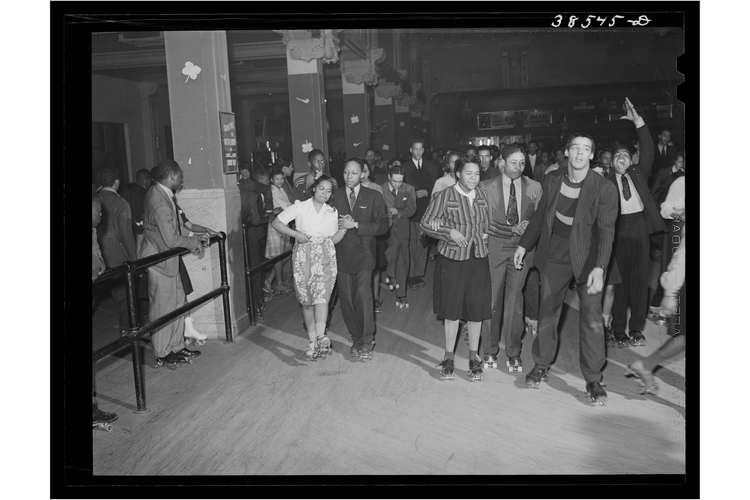
Skating in Chicago, Illinois.
Photograph by Russell Lee (1941) via the Library of Congress
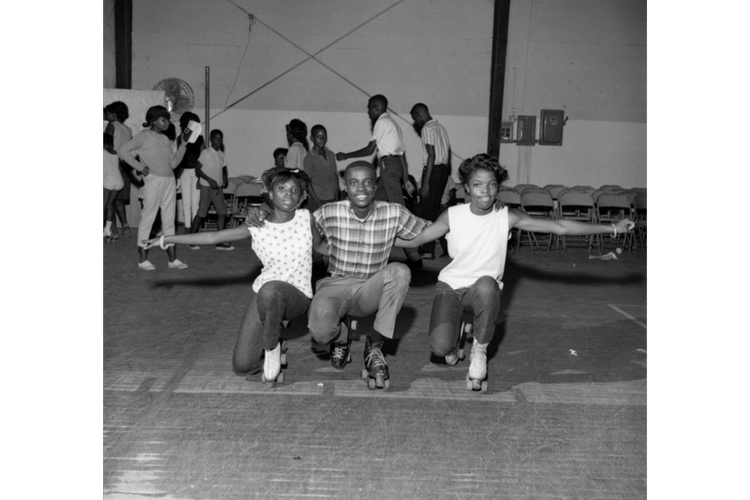
Skating at the Dade Street Recreation Center.
Tallahassee, Florida (1966) The center was later renamed Lawrence Gregory Community Center in 2002. Photograph via the Florida Memory Archive/State Library and Archives of Florida
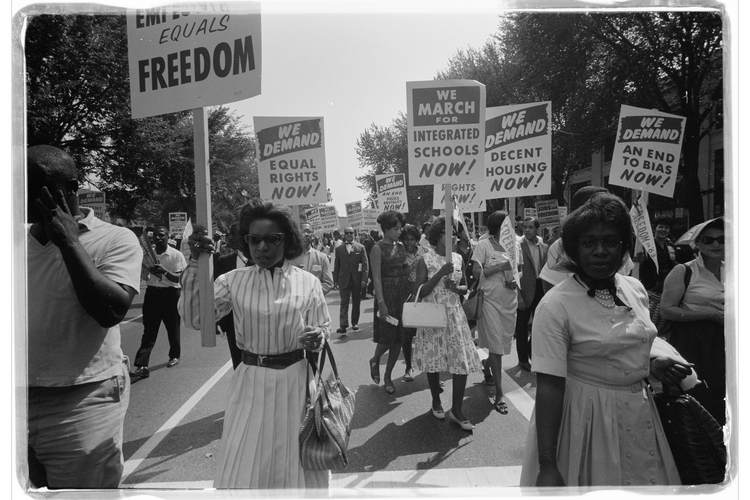
March on Washington, August 28, 1963. Photograph by Warren Leffler via the Library of Congress